

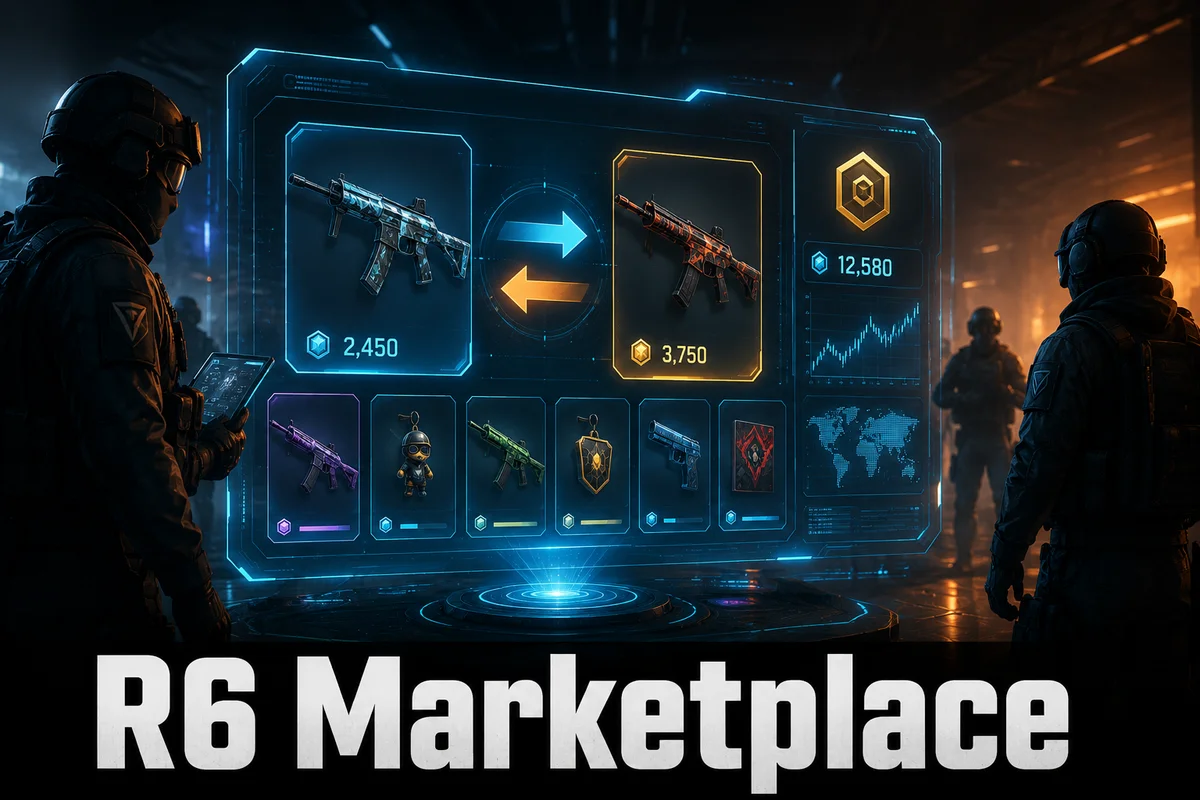
The R6 Marketplace is Ubisoft’s official trading space for Rainbow Six Siege players to buy and sell eligible cosmetic items using R6 Credits. It is not a cash-out site, a ranked shortcut, or a way to trade accounts. When available, players use it to find older weapon skins, operator outfits, charms, and other visual items, while sellers turn unused inventory into credits.
The smart approach in 2026 is to understand item eligibility, order matching, seller fees, account requirements, and current platform status before placing any order.
What the R6 Marketplace Actually Is
The R6 Marketplace is a controlled player-to-player trading system for Rainbow Six Siege cosmetics. It sits inside Ubisoft’s ecosystem, which means trades are handled through official account infrastructure rather than private messages, manual swaps, or third-party escrow.
The key point is that it deals with cosmetics only. Weapon skins, headgear, uniforms, charms, attachment skins, and similar items can change how your loadout looks, but they do not improve aim, damage, recoil, matchmaking, or operator strength.
That makes the platform more like a collection-management tool than a gameplay upgrade system. Buyers get a more direct way to look for items they missed. Sellers get a way to exchange eligible unwanted items for R6 Credits they can spend inside the game.
Why Players Search for This Trading Hub
Most players searching for this topic want one of three things: a specific old skin, a way to sell unused cosmetics, or a simple explanation of how pricing works. The search is also shaped by availability questions because the platform’s live status can change.
For collectors, the appeal is obvious. Instead of waiting for a lucky pack drop or a future bundle return, they can look for a specific item and place an order. For casual players, the benefit is a cleaner inventory value. A skin sitting unused on one account may be exactly what another player wants.
For sellers, the goal is usually not “profit” in the real-money sense. The system uses R6 Credits, so the value stays inside the Ubisoft/Rainbow Six Siege economy.
Account Requirements and Access
Before using the R6 Marketplace, your account must meet Ubisoft’s access rules. The most important requirements are a sufficient clearance level, two-factor authentication, recent activity that earns XP, and an account in good standing.
These rules exist to reduce fraud, protect inventories, and keep inactive or sanctioned accounts away from trading. If you meet the level requirement but still cannot access the platform, completing a match that grants XP and checking account security settings is usually the first step.
Availability also matters. In 2026, players have searched heavily for whether the trading layer is live, paused, or returning with a seasonal update. Always check Ubisoft’s official page or in-game notices before assuming that buying and selling are active on the day you want to trade.
How Buying Works
Buying is not the same as shopping from a normal store. You are not buying directly from Ubisoft at a fixed price. You are placing a purchase order against items that other players are willing to sell.
Purchase Orders Explained
A purchase order is the maximum amount of R6 Credits you are willing to pay for an item. Once you submit it, the system looks for a matching seller. If a seller is available at or below your maximum price, the transaction can complete automatically.
This design rewards patience. If you rush and set a high maximum price, you may spend more credits than needed. If you set a reasonable price and wait, you may catch a better match. The right move depends on how rare the item is, how much you want it, and how active the market is.
How Selling Works
Selling starts from the Sell section, where eligible inventory items appear. If an item does not show up there, it is not currently tradable, even if you own it in-game.
Sale Orders and the 10% Fee
To sell, you choose the item, set an asking price, and create a sale order. When a buyer’s purchase order matches your asking price, the transaction completes. Ubisoft retains a 10% transaction fee from completed sales, so sellers should price with that deduction in mind.
For example, if you list an item for 1,000 credits, do not plan as if the full amount will land in your balance. Also, remember that once an item sells, getting it back means buying it again from the market later, possibly at a different price.
What Items Can and Cannot Be Traded
Not every cosmetic item is market-eligible. Current-season items may be locked until a later season, and some items can remain non-tradable because of how they were earned, released, or restricted.
A simple rule helps: if it appears in the Sell section, it is eligible. If it does not appear, do not assume the platform is broken. The item may be too new, restricted, promotional, tied to a special reward, or simply not added to the tradable pool yet.
This is where many beginners get confused. Owning a skin does not automatically mean you can list it. Eligibility is controlled by the game’s rules, not by personal preference.
What Affects Item Prices
Prices move because players set them. A cosmetic becomes expensive when demand is high and supply is limited. It becomes cheaper when many sellers list it at once or when player interest drops.
| Price factor | How it affects value |
| Rarity | Harder-to-find items usually attract higher orders |
| Operator popularity | Skins linked to popular operators may get more attention |
| Weapon usage | Cosmetics for commonly used weapons can move faster |
| Event history | Older event items may become more desirable |
| Season timing | Updates can increase or lower demand quickly |
| Visual appeal | Clean, recognizable skins often stay easier to sell |
The safest buying habit is to compare prices before acting. The safest selling habit is to avoid underpricing a rare item just because you want credits quickly.
Safety, Scams, and Realistic Expectations
The official platform is safer than private trading because there is no need to negotiate with strangers, hand over account access, or trust a third-party middleman. Still, account security is your responsibility.
Enable two-factor authentication, use a strong password, and avoid websites or people claiming they can sell skins for cash, move items directly to a friend, or bypass account requirements. Those offers often create more risk than reward.
The R6 Marketplace should also not be treated like a money-making platform. Credits stay within the game economy, and item values can shift after updates, events, or long pauses. Use it to manage cosmetics and buy items you actually want, not as a guaranteed investment plan.
A Practical Checklist Before You Trade
Before buying, confirm the platform is available, check your credit balance, compare the item’s recent pricing behavior, and decide your maximum price before placing the order. Do not spend your whole balance just because a skin looks rare.
Before selling, check whether the item is hard to replace, compare similar listings if available, include the seller’s fee in your calculation, and ask yourself whether you would regret losing it. Many players only realize an item mattered after it leaves their inventory.
For newer players, the best first move is observation. Browse categories, learn which cosmetics appear often, watch how prices change around updates, and make small decisions before risking your favorite items.
Conclusion
The R6 Marketplace is useful because it gives Rainbow Six Siege players more control over the cosmetics they own and the cosmetics they want. Its value comes from official handling, clear credit-based trading, automatic order matching, and a system that keeps trades inside Ubisoft’s ecosystem.
Use it carefully. Check availability, secure your account, understand which items are eligible, and think before buying or selling. The best users are not the fastest traders. They are the ones who know what they want, know what they own, and avoid turning cosmetic trading into impulse spending.
FAQs
What is the R6 Marketplace?
It is Ubisoft’s official Rainbow Six Siege trading platform where eligible cosmetic items can be bought and sold using R6 Credits.
Can I sell R6 skins for real money?
No. The system uses R6 Credits, and credits remain inside the Ubisoft/Rainbow Six Siege economy. Be careful with any third-party site or person claiming otherwise.
Why are some of my skins missing from the Sell section?
They are likely not eligible for trading. Current-season items, special rewards, promotional cosmetics, or restricted items may not appear even if you own them.
Does the seller pay a fee?
Yes. Completed sales include a 10% transaction fee retained by Ubisoft, so sellers should calculate expected credit return after that fee.
Can console players use the platform?
Yes, console players can generally access it through a web browser with their Ubisoft account when the service is available, and the account meets the requirements.