


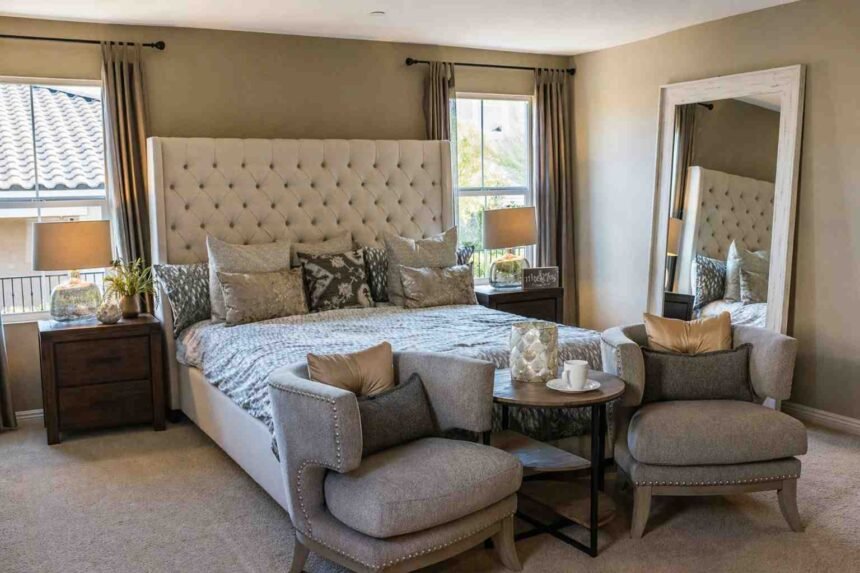
Choosing a bed frame style is one of the most permanent design decisions in a bedroom. Unlike cushions or rugs, a bed frame shapes the visual identity of the room for years. The choice between an upholstered bed and a panel bed reflects how you want the room to feel, what maintenance you are prepared to commit to, and what design language the rest of the space is already speaking.
What Is an Upholstered Bed?
An upholstered bed is any bed frame where the headboard, and in many cases the footboard and side rails, is covered in fabric, leather, or textile over a padded interior. Three primary silhouettes define the category: the shelter headboard, a clean rectangular panel suited to contemporary interiors; the wingback, where flanking side panels extend forward to partially enclose the bed; and the tufted headboard, where button or diamond stitching creates surface texture and a classical register.
The material defines the mood as directly as the form: velvet reads warm and layered; bouclé reads contemporary and tactile; full-grain leather reads refined and durable. The padded surface also provides functional comfort for reading or sitting upright in bed.
What Is a Panel Bed?
A panel bed is a traditional bed frame constructed from wood, engineered wood, or metal, featuring a structured headboard, footboard, and side rails. The headboard is the defining visual element: flat or raised panels, carved detailing, moulding, or architectural lines in wood or lacquered finish, each of which expresses a different style register.
Panel beds read naturally in traditional, transitional, and formal-contemporary interiors. A sleigh bed is a named variant within the panel family: the headboard and footboard curve outward in a scroll silhouette, adding grandeur and anchoring presence to a master suite.
Upholstered Beds: The Honest Assessment
The strengths begin with tactile warmth. No wood or metal frame introduces texture, depth, and color into a bedroom the way a fabric or leather headboard does. At the luxury end, custom upholstery options allow buyers to specify fabric family, color, texture, and trim detail, transforming the bed from a catalogue selection into a bespoke design object that coordinates precisely with the room. The honest consideration: fabric upholstery requires maintenance.
Monthly vacuuming, prompt treatment of spills, and periodic professional cleaning for delicate materials are part of ownership. Performance fabrics and leather substantially reduce this burden. Buyers with pets or high-wear households should prioritize both over velvet or open-weave bouclé.
Panel Beds: The Honest Assessment
The primary advantage of a panel bed is longevity. A well-constructed, solid wood or hardwood veneer frame does not degrade the way fabric or foam can over time. Maintenance simplicity follows: wood and lacquered surfaces wipe clean with no care regimen. The structured lines communicate a definite aesthetic that reads consistently over the years. The main considerations: a wood headboard is not comfortable to lean against, and a separate cushion is often added at extra cost. A strongly traditional panel bed commits to a specific aesthetic that does not adapt easily if the surrounding décor evolves.
Matching the Style to Your Room
The correct approach is to frame this as a design question, not a durability comparison. Upholstered beds suit contemporary, warm-modern, and transitional interiors where softness and texture dominate. In rooms where surrounding surfaces are hard, concrete, exposed brick, or lacquered millwork, an upholstered frame provides acoustic softening and visual warmth that a wood frame cannot. Panel beds suit traditional, classical, and formal-contemporary interiors with architectural detail, where a wood frame continues the material language of the space.
They are also the practical first choice for guest suites where longevity and low maintenance take priority. Ceiling height matters for both: tall upholstered headboards perform best in rooms at 2.7 meters or higher; in standard 8-foot ceilings, a lower profile reads more proportionally.
If you are working through the size decision at the same time, this king vs queen bed guide covers room dimensions, clearance rules, and design proportion across both sizes.
The Custom Upholstery Variable
One consideration most guides overlook: custom upholstery changes the upholstered bed from a product purchase to a design specification. Standard retail upholstered beds come in four to twelve manufacturer colorways per frame. Custom upholstery allows the buyer to specify fabric family, color, texture, and trim detail from a full commercial upholstery library. This is the difference between buying an upholstered bed and specifying one. The custom route produces a frame matched precisely to the room’s palette and long-term design intention, including headboard height, padding density, and trim detail such as nailhead, piping, or clean-edge finish.
To explore upholstered and panel bed options, Mobilart’s bed frame collection covers both styles across multiple silhouettes, finishes, and custom upholstery configurations.
Which style did you choose for your bedroom, and what tipped the decision? We would love to hear your experience in the comments below.
AUTHOR BIO
This article was contributed by the design team at Mobilart, a Montreal-based luxury furniture retailer specialising in bedroom, living room, and dining room furniture from trusted international and North American manufacturers. With over 40 years of curation experience, Mobilart helps clients navigate decisions from style selection through to full room composition. Visit mobilart.ca to explore the collection.