


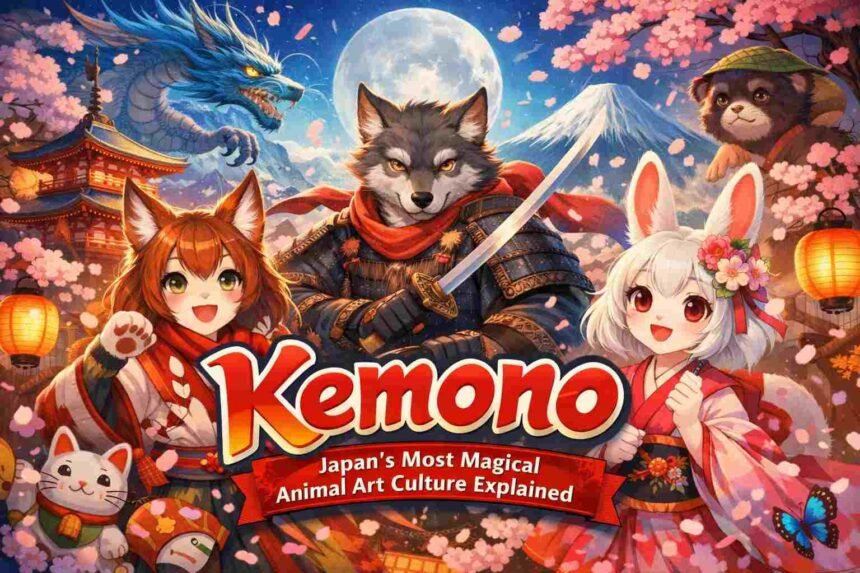
Have you ever looked at an animal character in a movie or comic and felt a deep, warm connection? That feeling has a name. It is called kemono — a beautiful, powerful art tradition born in Japan. These amazing characters look like animals, but they walk, talk, and feel just like humans. They wear clothes, share emotions, and tell unforgettable stories.
- What Does Kemono Mean?
- The Ancient Roots of Kemono Culture
- How Modern Kemono Art Was Born
- The Stunning Visual Style of Kemono Art
- Kemono vs. Western Furry Art: Key Differences
- The Incredible World of Kemono Characters
- Kemono Conventions: Where the Magic Comes to Life
- Creating Your Own Kemono Character: A Beginner’s Guide
- The Global Community and Its Positive Impact
- Kemono in Popular Culture: Famous Examples
- Why Kemono Culture Continues to Grow in 2026
- Conclusion: Step Into This Beautiful World
- Frequently Asked Questions (FAQs)
From ancient fox spirits in Japanese shrines to modern manga heroes, this art style has captured millions of hearts across the world. Whether you are a curious beginner or a longtime fan, this guide will walk you through everything you need to know. Get ready to explore one of the most creative and exciting cultures on the planet.
What Does Kemono Mean?
The word itself comes directly from the Japanese language. It translates simply to “beast” or “animal.” But do not let that simple meaning fool you. In today’s creative world, this term means so much more than just an animal. It describes a whole universe of characters that blend the wild spirit of animals with the heart and soul of humans.
These characters stand upright like people. They use their hands to build, create, and connect. They laugh, cry, dream, and grow. Artists design them with careful detail — giving them big, expressive eyes, soft fur textures, and rich personalities. The result is something truly magical.
You feel like you know these characters personally. You root for them in stories, admire them in art, and sometimes even dress up as them at events. That powerful emotional pull is exactly what makes this art style so special and so deeply loved.
The Ancient Roots of Kemono Culture
This art style did not appear overnight. Its roots stretch back hundreds of years into Japanese history and folklore. Ancient Japan was full of stories about magical creatures called yōkai. These beings could shift between animal and human forms. The clever kitsune (fox) could transform into a beautiful woman. The playful tanuki (raccoon dog) could disguise itself as a human monk. These stories were told around fires, painted on temple walls, and passed down through generations.
Shinto shrines celebrated animal spirits as powerful guardians. Traditional Noh theater masks brought animal-human faces to life on stage. Even ancient scrolls showed rabbits and frogs behaving like humans in comical scenes. Japan has always had a deep, loving relationship with animals and nature.
That relationship became the strong foundation on which today’s vibrant art community proudly stands. When you look at a modern character with fluffy ears and kind eyes, you are actually seeing thousands of years of Japanese imagination come alive.
How Modern Kemono Art Was Born
The modern form of this culture truly came alive during Japan’s dojin (fan-made art) boom of the 1980s and 1990s. Independent artists at fan events began creating original anthropomorphic characters with incredible skill and passion. These were not copies of existing characters. They were fresh, personal creations that spoke to something deep inside the human heart.
By the early 2000s, the internet gave this movement wings. Online platforms like Pixiv became gathering places for artists to share their work with the entire world. Communities formed overnight. Artists from Japan connected with fans in America, Europe, Australia, and beyond. Popular anime like BEASTARS and films like Zootopia brought anthropomorphic storytelling to massive global audiences. Suddenly, millions of people understood the joy of seeing animals express human emotions with beauty and depth. The community grew faster than anyone had imagined possible.
The Stunning Visual Style of Kemono Art
One of the most exciting things about this art form is how it looks. The visual style is instantly recognizable and absolutely stunning. Artists follow certain beautiful design principles that make every character feel alive and real.
Characters feature large, deeply expressive eyes that communicate emotion without words. Their animal traits — pointed ears, fluffy tails, colorful fur — stay clearly visible and celebrated. But their bodies move and gesture like humans. Their faces show joy, sadness, determination, and love.
Color palettes range from soft, dreamy pastels to bold, electric neons. Traditional Japanese motifs like cherry blossoms, torii gates, and flowing patterns often appear as beautiful backgrounds. Every single piece of art tells a story. Every character has a soul. That combination of cuteness, depth, and cultural richness is what separates this style from all other art forms in the world today.
Kemono vs. Western Furry Art: Key Differences
Many people wonder how this Japanese tradition compares to the Western furry art community. Both celebrate anthropomorphic animal characters, and both communities share a love of creativity and self-expression. However, there are some clear and fascinating differences worth understanding.
Japanese-style characters tend to emphasize rounder, softer proportions and a strong sense of kawaii (cuteness). The designs carry deep anime and manga influence. They often reference traditional cultural symbols and folklore. Western furry art, on the other hand, frequently embraces more exaggerated cartoon proportions and a wider range of styles from realistic to highly abstract.
Western communities also have a stronger fandom-driven convention culture with large annual events. The exciting news is that today, both communities actively learn from each other. Artists cross cultural boundaries all the time, creating beautiful hybrid styles that honor both traditions. This cross-cultural exchange makes the whole global community richer and more creative.
The Incredible World of Kemono Characters
Characters are the beating heart of this art culture. Every artist brings something unique and personal to their creations. Some design fierce warrior foxes with gleaming armor. Others craft gentle rabbit scholars surrounded by books and candlelight. There are wolf musicians, bear chefs, cat engineers, and dragon healers. The possibilities are truly endless.
What makes a great anthropomorphic character? First, it needs a clear animal identity. The animal traits must be visible and celebrated, not hidden. Second, it needs genuine human emotion. The character must feel like a real person with thoughts, dreams, and struggles. Third, it needs a story.
Where did this character come from? What do they want? What do they fear? The best characters answer these questions through their appearance alone, before a single word of their story is told. That is the breathtaking skill at the heart of this creative tradition.
Kemono Conventions: Where the Magic Comes to Life
The community does not only exist on screens. Real-world events bring fans and creators together in the most wonderful ways. Japan Meets Overseas Furries (JMoF) is one of the most celebrated annual gatherings in the world. Held in Aichi Prefecture, Japan, this multi-day convention welcomes fans from across Japan and dozens of countries. Attendees share art, music, costumes, and performances. The energy is electric and joyful.
Kemocon, held at the stunning foot of Mount Fuji in Gotemba, is another premier event drawing passionate fans from across East Asia and beyond. These conventions are not just parties. They are living celebrations of creativity, friendship, and cultural exchange.
Artists sell original prints and handcrafted goods. Musicians perform original songs inspired by their characters. Costume designers display elaborate full-body fursuits that took months to create. Attending one of these events is a life-changing experience that reminds everyone why art and community matter so deeply.
Creating Your Own Kemono Character: A Beginner’s Guide
Are you feeling inspired to create your own character? Wonderful! The process is easier than you might think, and the journey itself is deeply rewarding. Here is a simple, friendly guide to get you started on this exciting, creative adventure.
Start by choosing your animal. Pick one that speaks to your personality or interests. Are you brave like a lion? Clever like a fox? Gentle like a deer? Next, study your chosen animal carefully. Notice how it moves, how its features are shaped, and what makes it unique. Then begin sketching basic body proportions — keep them soft and rounded for a friendly look.
Add large, expressive eyes early in the process, as they will define your character’s personality instantly. Layer in fur textures, colors, and clothing that reflect who this character truly is. Finally, give your creation a name, a backstory, and a dream. You are not just drawing an animal. You are bringing a whole new person into the world. That is the incredible power of this art form.
The Global Community and Its Positive Impact
One of the most beautiful aspects of this culture is the global community it has built. Artists and fans from dozens of countries connect online every single day. Language barriers melt away when two people both love and admire the same beautifully drawn character. Online platforms host millions of pieces of original artwork, fan stories, music tracks, and short animations — all created with genuine passion and shared freely with the world.
This community actively encourages newcomers. Experienced artists mentor beginners with patience and generosity. Constructive feedback replaces harsh criticism. Collaboration is celebrated over competition. Many artists credit this supportive environment with helping them discover their unique voice, sharpen their skills, and build lasting friendships across continents.
The positive, creative energy that flows through this global community is genuinely remarkable. It shows what happens when people unite around shared passion rather than division.
Kemono in Popular Culture: Famous Examples
You have probably encountered this art style without even realizing it. Its influence appears throughout mainstream entertainment in powerful ways. BEASTARS, the celebrated manga and Netflix anime series, presents a sophisticated world where carnivores and herbivores navigate complex social structures. It is deeply moving, beautifully designed, and rich with anthropomorphic storytelling.
Disney and Pixar’s Zootopia brought a fully realized animal-human city to international cinema screens, winning the Academy Award for Best Animated Feature. Pokémon has captured global hearts for decades with its lovable creature designs that carry clear anthropomorphic charm. Even classic works like The Lion King draw on the same deep tradition of giving animals human emotional depth and dignity.
These mainstream successes prove that the core appeal of anthropomorphic characters is universal. People everywhere connect with animals that feel human. That connection is timeless, cross-cultural, and genuinely beautiful.
Why Kemono Culture Continues to Grow in 2026
This is not a fading trend. It is a growing, thriving global movement. In 2026, new artists are discovering this style every single day. New conventions are announced. New platforms emerge to support creators and connect communities. New stories are written and illustrated with extraordinary skill and heart.
The reasons for this continued growth are clear. First, people genuinely hunger for creative communities that celebrate originality. Second, anthropomorphic characters provide a unique way to explore identity, emotion, and storytelling without the constraints of purely human or purely animal narratives.
Third, the internet makes it easier than ever for fans worldwide to find each other and collaborate. As technology advances — including virtual reality conventions and digital art tools — this creative tradition will only become richer, more accessible, and more beloved. The future is bright, wild, and wonderfully full of possibility.
Conclusion: Step Into This Beautiful World
Now you know the full, wonderful story. From ancient Japanese fox spirits to modern digital artists creating breathtaking characters on global platforms, this is a culture built on imagination, passion, and genuine human connection. It celebrates the wild beauty of animals and the depth of the human heart at the same time. That combination is rare, powerful, and truly special.
Whether you want to admire the art, create your own characters, attend a convention, or simply learn more about this fascinating culture, the door is wide open, and the community is warmly welcoming. Take your first step today. Start sketching. Join a community forum. Watch BEASTARS tonight. The journey you are about to begin is one you will never regret. Share this article with a friend who loves art, animals, or Japanese culture — and let the adventure begin together.
Frequently Asked Questions (FAQs)
Q1. What does kemono mean in Japanese?
It is the Japanese word for “beast” or “animal.” In modern creative circles, it describes anthropomorphic animal characters that display human traits, emotions, and behaviors. These characters are central to a rich and growing global art and fan community.
Q2. How is kemono different from Western furry art?
Both celebrate anthropomorphic animals, but the Japanese style emphasizes softer proportions, kawaii (cuteness), and strong anime and manga influences. Western furry art often embraces more exaggerated cartoon styles and a different kind of fandom convention culture. Today, both communities actively inspire and learn from each other.
Q3. Where did kemono art originally come from?
Its roots go back to ancient Japanese folklore, featuring magical shapeshifting creatures like kitsune (foxes) and tanuki (raccoon dogs). The modern art style grew out of Japan’s fan-made dojin culture in the 1980s and 1990s, later exploding globally through the internet in the early 2000s.
Q4. Can beginners learn to draw kemono characters?
Absolutely yes! Anyone can learn this art style with patience and practice. Start by studying animal anatomy, then practice drawing large, expressive eyes and soft, rounded proportions. The community is wonderfully supportive and full of free tutorials, feedback, and encouragement for artists at every skill level.
Q5. Are there real-world events for this community?
Yes! Events like JMoF in Aichi Prefecture, Japan, and Kemocon near Mount Fuji are major annual celebrations that welcome fans from all over the world. These conventions feature art exhibitions, music performances, costume showcases, and incredible opportunities to make lifelong friends.
Q6. Why is anthropomorphic art so emotionally powerful?
Anthropomorphic characters combine the instinctive human love of animals with the deep human need to see our own emotions reflected in stories. When an animal character cries, hopes, or triumphs, we feel it personally. This powerful emotional bridge is what makes this entire art tradition so lasting and universally beloved.