


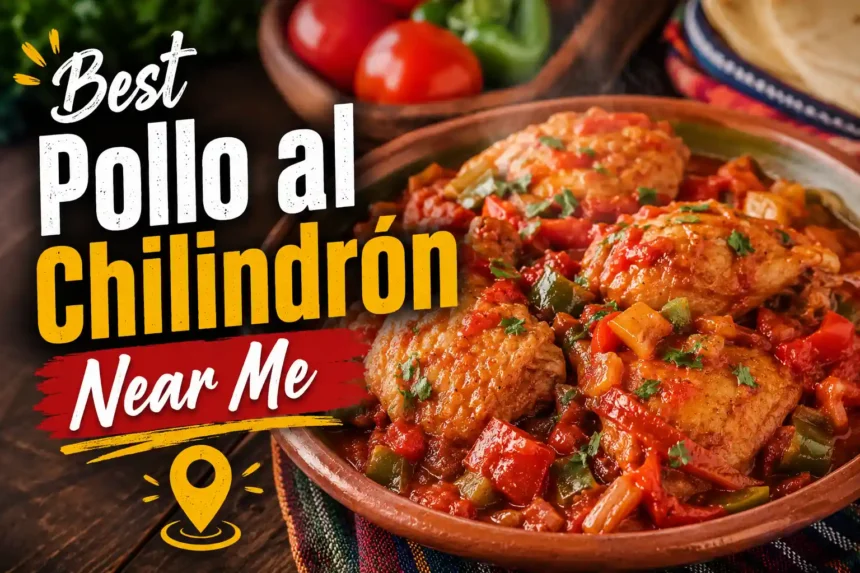
If you’re searching for the best pollo al chilindrón near me, here’s what you’re actually looking for: a slow-cooked Spanish chicken stew from the Aragón region, built on a thick sauce of red bell peppers, ripe tomatoes, onions, garlic, and jamón serrano. The result is a dish that balances smoky, sweet, and savory flavors in a single pot — rustic in origin but deeply satisfying on the plate.
It is not spicy. It is not fast food. It is the kind of meal that rewards patience — both from the cook and the diner.
Where This Dish Actually Comes From
Pollo al chilindrón originates from the regions of Aragón and Navarra in northern Spain, where chicken, bell peppers, tomatoes, and jamón serrano were plentiful staples of rustic, slow-cooked home cooking.
Historians trace the dish specifically to the city of Zaragoza in Aragón, from where it spread to neighboring regions and eventually became popular across the entire country.
The name itself carries an interesting story. It is believed to derive from a card game called “chilindrón,” where the winner would decide which diner at the table paid for the meal. The dish became associated with that communal, celebratory spirit — shared food, shared company.
Aragón’s fertile land near the Ebro River produces exceptional vegetables, which is a large part of why this dish developed such a distinctive character in that region. The local peppers, in particular, give the sauce a natural sweetness that you can’t replicate with inferior produce.
The recipe is also believed to carry historical influences from Arab and Jewish culinary traditions that shaped Aragonese gastronomy over centuries, which explains the layered complexity of a dish made from seemingly simple ingredients.
The Core Ingredients That Define an Authentic Version
A properly made pollo al chilindrón is not complicated, but every element matters. Here is what should always be present:
| Ingredient | Role in the Dish |
| Chicken (bone-in pieces) | Stays juicy through slow simmering; absorbs the sauce deeply |
| Red bell peppers | Core of the chilindrón sauce; provides sweetness and color |
| Ripe tomatoes | Builds the body of the sauce; fresh or quality canned |
| Jamón serrano | Adds umami depth and a savory counterpoint to the peppers |
| Onion and garlic | Aromatic base, slow-cooked until golden |
| Olive oil | Essential fat should be extra virgin |
| Spanish paprika (pimentón) | Smokiness and color |
| White wine (optional) | Added depth; evaporated into the sauce during cooking |
The name “chilindrón” refers specifically to this signature sauce — a robust combination of sautéed onions, garlic, red and green bell peppers, and ripe tomatoes, often enriched with smoky Spanish paprika.
If a restaurant’s version lacks jamón, uses boneless chicken breast without adjustment, or serves a thin, watery sauce, it has cut corners on the fundamentals.
Regional Variations Worth Knowing
Not every pollo al chilindrón is identical — and that’s actually a sign of a living culinary tradition, not inconsistency.
In Aragón itself, lamb or rabbit sometimes replaces chicken, reflecting the historical availability of meats in the region. In Navarra, cooks add piquillo peppers, prized for their distinct sweet and smoky character.
Some variations include white wine, Serrano ham in larger quantities, or almonds, depending on the family or regional tradition behind the recipe. A restaurant that acknowledges these differences on its menu or in conversation with staff is usually one that takes the dish seriously.
How to Spot a Restaurant That Does It Right
Finding the best pollo al chilindrón near you is less about finding a Spanish restaurant and more about finding one that respects the cooking process. Here is a practical checklist:
Look for these green flags:
- The dish is described as slow-cooked or braised, not pan-fried
- The menu mentions jamón serrano or Serrano ham as an ingredient
- The sauce is described as thick, pepper-based, or chilindrón-style
- Staff can explain the dish or its origin when asked
- The restaurant specializes in Spanish, Mediterranean, or Aragonese cuisine
- Reviews mention flavor depth, tender chicken, or rich sauce — not just “good chicken.”
Watch out for these shortcuts:
- Boneless, skinless chicken breast is the only cut offered (loses moisture and depth in stewing)
- Watery or pale sauce (proper chilindrón is deep red and thick)
- No mention of jamón or cured ham anywhere on the menu
- The dish is listed as a “daily special” with no consistent description
A restaurant treating this as a signature dish — rather than a rotating item — is almost always the better choice.
How to Search for Pollo al Chilindrón Near You
The most direct approach is a Google Maps search. Use these search phrases for better results:
- “pollo al chilindrón” (with accent marks — this filters out generic results)
- Spanish restaurant [your city]
- Aragonese cuisine [your city]
- Mediterranean chicken stew [your city]
When you find a candidate, check:
- Menu language — Does the description mention peppers, tomatoes, and ham? Or just “Spanish chicken”?
- Review keywords — Search for “chilindrón” specifically in the Google reviews section.
- Photos — Authentic versions have a deep red-orange sauce and visible vegetable pieces; avoid pale or cream-colored dishes listed under the same name.
- Chef background — Some restaurant profiles mention training in Spain or regional specialization
If no dedicated Spanish restaurant exists nearby, look for tapas bars, Mediterranean restaurants, or Latin American restaurants with Spanish influence — some of the best versions of this dish outside Spain appear in Latin American establishments that maintain the original Aragonese preparation.
What to Order Alongside It
Pollo al chilindrón is traditionally served with crusty bread, rice, or roasted potatoes — a comforting, one-pot meal that represents the heart of Spain’s regional cuisine.
For wine, the pairing is straightforward: Spanish red wines such as Rioja, Tempranillo, and Garnacha complement the smoky and savory flavors of the dish naturally. If you prefer white wine, a dry Verdejo or Albariño also works well with the pepper-forward sauce.
For a full table experience, start with a simple green salad dressed in olive oil and sherry vinegar — it cleans the palate before the richness of the main dish.
Finding the Right Plate
Pollo al chilindrón is one of Spain’s oldest documented dishes — a recipe that survived centuries not because it was trendy, but because it works. Tender chicken, slow-cooked peppers, and the quiet saltiness of cured ham are a combination that holds up in any setting, from a Zaragoza family kitchen to a restaurant in your city.
When you search for the best pollo al chilindrón near me, look past the Spanish flag emoji and the word “authentic” in the restaurant description. Check the actual menu language, look at photos, and ask about the preparation. The dish rewards that small amount of effort with a meal that stays in memory.
You’re right — the FAQs had unnecessary padding. Here are the corrected FAQs with H3 questions and direct paragraph answers:
FAQs
Is pollo al chilindrón spicy?
No. The dish is mild. The peppers add sweetness, not heat.
What does “chilindrón” mean?
It comes from a Spanish card game where the winner decided who paid for the meal. The name eventually transferred to the dish served at those gatherings.
Can I find pollo al chilindrón outside Spanish restaurants?
Yes. Mediterranean restaurants, tapas bars, and Latin American places with Spanish influence often serve it. Search the dish name directly in Google reviews rather than filtering by restaurant type.
How is pollo al chilindrón different from other Spanish chicken stews?
The difference is the chilindrón sauce — red bell peppers, tomatoes, garlic, and jamón serrano slow-cooked together. Other Spanish chicken stews use saffron, wine, or almonds as the base flavor instead.
What should authentic pollo al chilindrón look like when served?
A deep red-orange sauce, bone-in chicken pieces, and visible pepper and onion chunks. The sauce should be thick enough to coat the chicken — not watery or broth-like.