

If you’re serious about paid social, you already know that creative testing is the job. Not the budget. Not the targeting. The creative. I’ve been running ad accounts for seven years, and the single biggest variable in performance is always the hook, those first three seconds that either stop the scroll or lose the viewer forever. The problem has always been volume. Testing ten hooks a week sounds simple until you realize each one needs a video, and each video used to mean a shoot, a brief, an actor, and an edit.
- Why Hook Testing is the Core of Performance Marketing
- What UGC Maker Actually Does in a Testing Workflow
- 1. Avatar variations let me test persona without reshooting
- 2. The URL-to-video tool is where volume comes from
- 3. The Ad Library helps me build better hypotheses
- What the Results Looked Like
- One Thing I Didn’t Expect: The Quality Floor Is High Enough for Real Campaigns
- Who This Workflow Actually Works For
That changed when I started using UGC Maker. What I found wasn’t just a faster way to make videos, it was a fundamentally different way to approach creative testing.
Why Hook Testing is the Core of Performance Marketing
Most advertisers underproduce creative. They make one or two versions of an ad, run them, and call it a test. But if you’re not isolating variables systematically, hook vs. hook, CTA vs. CTA, persona vs. persona, you’re not really learning anything. You’re just spending money.
For creative testing to work at scale, you need output. A lot of it. And it has to be consistent enough that you can attribute differences in performance to the variable you changed, not to production quality differences.
What UGC Maker Actually Does in a Testing Workflow
1. Avatar variations let me test persona without reshooting
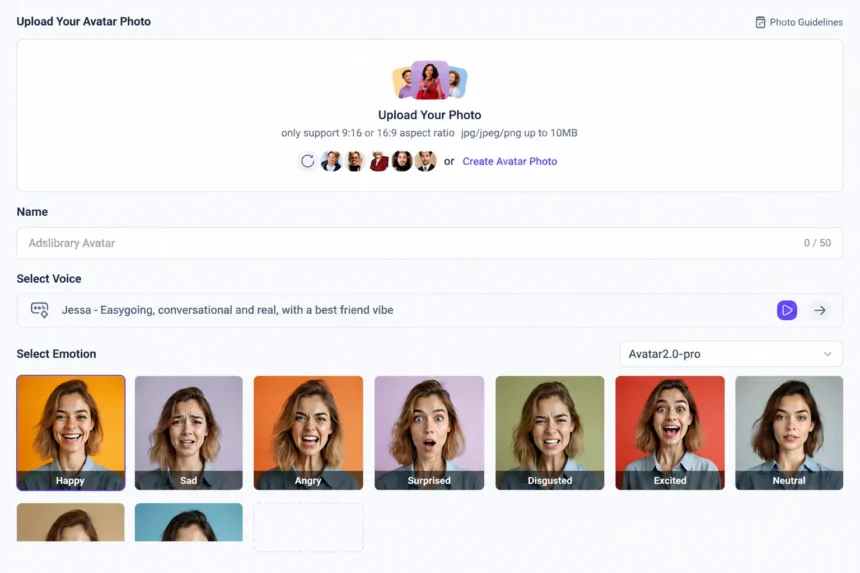
One of the most underrated variables in UGC-style ads is who delivers the message. The same script performs differently depending on age, tone, energy, and perceived relatability. With UGC Maker’s UGC Avatar Maker, I can run the same 30-second script through five different avatars in the time it used to take me to brief one creator.
I can test:
- A confident professional tone vs. a casual conversational style
- A younger demo-facing persona vs. a more authoritative voice
- Different visual styles to match seasonal campaigns or audience segments
The preset avatar library covers a wide range of styles. And if you need something consistent across a long campaign, you can create your own custom digital persona, which I’ve done for two of my clients now.
(Upload Your Photo to Generate Avatar on UGC Maker)
2. The URL-to-video tool is where volume comes from
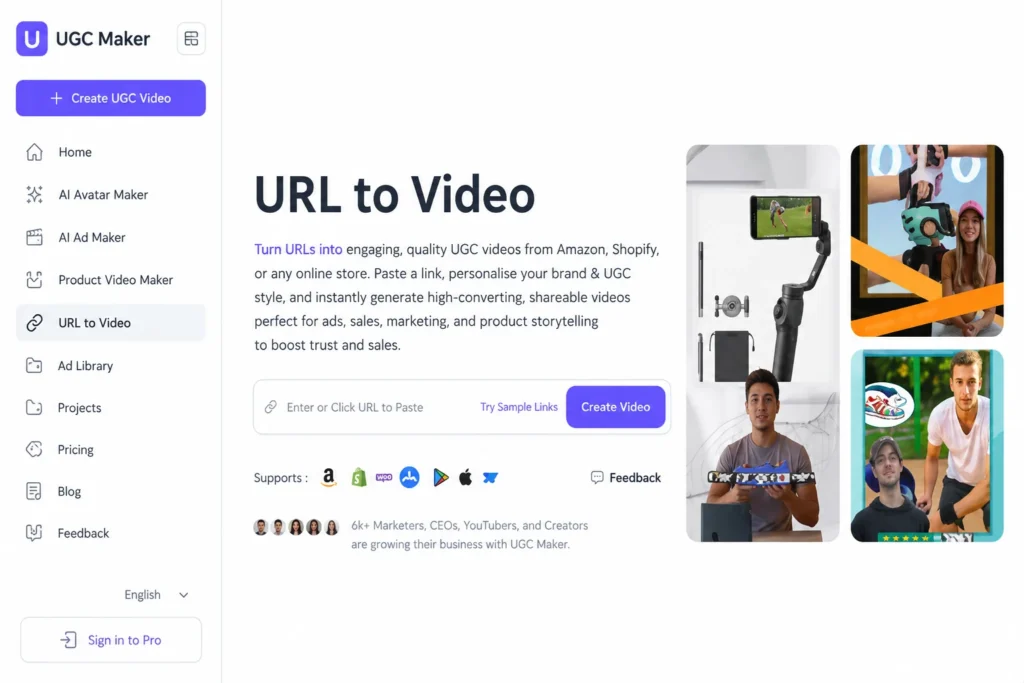
This is the feature that made real creative velocity possible for me. I paste a product URL, a landing page, a Shopify product page, a review article, whatever, and UGC Maker’s URL to Video automatically pulls the product information, builds a script structure, and generates a complete video.
From there, I edit the hook, swap the avatar, adjust the CTA, and I have a new variant. The whole process takes under ten minutes per version. Last week I produced 12 testable video variants before lunch.
That kind of throughput used to be impossible without a dedicated creative team.
(From URL to Video in Seconds with UGC Maker)
3. The Ad Library helps me build better hypotheses
Before I write a single hook, I check UGC Maker’s Ad Library. With over 10M+ ads indexed, it’s the best place I’ve found to study what’s actually performing in a given niche right now.
I use it to:
- Identify the most common hook structures in my vertical
- Find patterns in what formats are trending on TikTok and Meta
- Pull examples to show clients why a particular creative direction has merit
It’s not about copying. It’s about informed hypotheses. You test faster when you know what direction you’re testing in.
What the Results Looked Like
After six weeks of running ten hooks per week through UGC Maker, here’s what stood out:
- Win rate on the first iterations improved. When I started from an Ad Library insight rather than a blank brief, more first-round tests produced a positive ROAS signal.
- My cost per winning creative dropped significantly. Instead of paying for shoots that might not yield anything usable, I was only putting media budget behind concepts that had already shown engagement in preview testing.
- Client confidence increased. Being able to present ten distinct video variants in a creative review, rather than three, changes the conversation entirely.
One Thing I Didn’t Expect: The Quality Floor Is High Enough for Real Campaigns
Before committing to UGC Maker as a production tool, my biggest concern was simple: would the output actually look good enough to run? That concern turned out to be unfounded for the format we’re talking about.
UGC-style ads aren’t supposed to look like polished brand films. They’re supposed to look like someone talking to a camera. The avatar outputs from UGC Maker fit that aesthetic naturally. When I ran split tests pitting UGC Maker videos against traditionally shot UGC content with similar scripts, the performance gap was negligible, and in two cases, the AI-generated versions outperformed.
Here’s why that happens:
- The avatar delivers the hook the same way every time — no natural variation from a nervous on-camera talent
- Consistency means you’re isolating the variable you want to test, not introducing noise from delivery differences
- The visual quality is high enough that audiences on TikTok and Meta don’t flag it as inauthentic
That’s when I stopped thinking of UGC Maker as a “fast but good enough” tool and started treating it as a legitimate testing instrument.
Who This Workflow Actually Works For
If you’re managing ad accounts and you’re still waiting on production to deliver creatives, UGC Maker solves that bottleneck directly. It’s designed for the kind of iterative, data-driven creative testing that performance marketers actually need, not polished brand films, but fast, authentic, testable UGC content.
Social media ad strategy at this level requires tools that match the pace of the platforms. UGC Maker does that. Start with the free trial and run your first five hooks this week. You’ll see what I mean.