

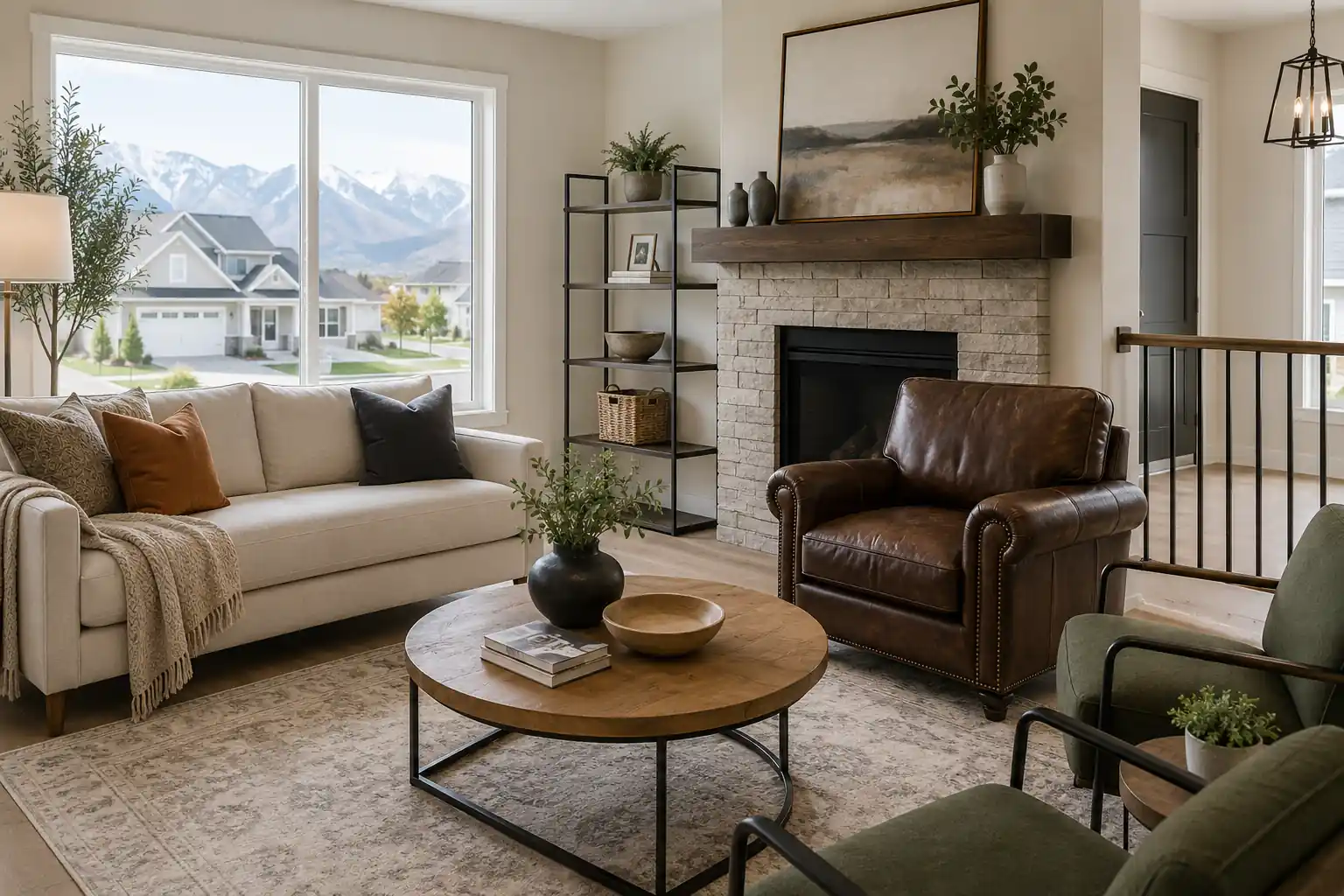
The residential profile of Layton, Utah, is highly dynamic, driven by a growing commercial tech sector, proximity to Hill Air Force Base, and an ongoing influx of families drawn to Davis County’s exceptional schools and outdoor recreation. This diverse demographic makeup creates a wide variety of housing arrangements. Out-of-state contractors and military personnel often navigate transient, twelve-month assignments, while young families and expanding households establish multi-decade roots in permanent neighborhoods.
When organizing or updating a household along the Wasatch Front, property owners face a fundamental asset-allocation puzzle: should home furnishings be approached as consumable, short-term utility expenses, or as depreciable, long-term capital investments? Miscalculating this balance can result in ongoing financial drain, either through the repeated replacement of structurally failed temporary goods or through the unnecessary liquidation of premium items due to an unexpected relocation.
The Regional Stressors on Interior Material Longevity
Evaluating furniture strictly by its upfront retail price ignores the environmental variables unique to northern Utah. The climate of the Salt Lake Valley and the adjacent benchlands features distinct atmospheric shifts that directly challenge structural integrity.
The primary environmental factor is the severe seasonal fluctuation in relative indoor humidity. Layton experiences freezing, snow-heavy winters where indoor heating systems run constantly, followed by hot, arid summers. This cycle aggressively strips moisture from natural fibers and porous substrates.
Cheap composite woods, unsealed particleboard, and inferior industrial glues can rapidly dry out, delaminate, or warp under these conditions. Furthermore, active households frequently track in winter road salts, mountain silts, and abrasive dust, subjecting floor-level joints and upholstery to continuous structural stress.
The Short-Term Horizon: Under 24 Months
For temporary relocation, short-term corporate housing, or transitional rental periods, the objective centers on minimizing upfront capital commitment and preserving logistical agility.
- Material Priority: Look for lightweight configurations with highly resilient, synthetic outer surfaces. High-pressure laminates and powder-coated metal frames perform well here because they resist chips during transit and do not require climate-controlled maintenance.
- Liquidity and Modular Utility: Select independent, versatile items such as modular shelving units or compact accent seating that can adapt easily to unpredictable future floor plans without losing functional value.
The Long-Term Horizon: Three Years and Beyond
When setting up a permanent residence, the procurement strategy shifts completely from cost containment to long-term capital preservation, skeletal support, and material endurance.
- The Structural Foundation: Core foundational items, including the main living room sectional, the dining room table, and primary sleep systems, should be treated as multi-year investments. Prioritizing internal components like kiln-dried solid hardwoods and interlocking double-doweled joints protects the household from the regional climate’s drying effects.
- Upholstery Metrics: Long-term seating should feature high-density polyurethane foam cores wrapped in commercial-grade performance fabrics or authentic top-grain leathers, both of which develop a resilient character rather than fraying under heavy daily use.
When navigating these investment tiers, testing material compositions in a physical showroom is a critical step. Visiting a comprehensive furniture store in Layton UT allows buyers to physically evaluate frame deflection, check drawer glide mechanics, and inspect raw textile samples under natural light before allocating a significant budget.
Integrating Supply Chains and Local Logistics
The total cost of home furnishing is heavily tied to delivery orchestration and assembly logistics. Sourcing individual pieces from fragmented online retailers often results in mismatched delivery windows, hidden curbside drop-off fees, and the physical burden of self-assembly, which can inadvertently compromise an item’s structural stability if connections are poorly fastened.
For comprehensive residential upgrades, aligning with a reputable regional distribution network like RC Willey simplifies your project timeline. Utilizing full-service corporate delivery networks ensures that large, multi-room setups are transported, placed, and assembled professionally in a single operational window.
This professional oversight eliminates transit damage and guarantees that complex mechanical frames, such as power-reclining sectionals or solid wood bed structures, are calibrated correctly for years of dependable service.
Balancing the Financial Trade-offs
High-Investment Procurement
- Benefits: Exceptional ergonomics, superior structural stability through severe seasonal changes, and an extended product lifecycle that lowers the lifetime cost per use.
- Limitations: Requires a substantial upfront cash allocation and presents a high logistical burden if the items must be moved long distances in the future.
Budget-Focused Utility Procurement
- Benefits: Immediate cost savings, minimal financial risk if the items are damaged or left behind, and rapid procurement times for temporary living spaces.
- Limitations: Prone to premature structural sagging, high susceptibility to atmospheric warping, and zero residual value upon liquidation.
Final Investment Framework
Successfully furnishing a home in Layton requires looking past superficial design trends and evaluating the real utility of each item relative to your timeline. By aligning your material selections with your actual length of stay, protecting your purchases from regional climate strains, and relying on dependable local delivery systems, you can establish an efficient, comfortable home that protects your capital and supports your lifestyle.
Frequently Asked Questions
Why do cheap veneer surfaces peel apart in Utah’s winter climate?
When indoor heating drops humidity levels, the underlying particleboard substrate expands and contracts at a different rate than the decorative outer plastic veneer. This structural tension eventually shears the inferior adhesive bond, causing the edges to crack, bubble, and peel away permanently.
How can I identify a high-quality sofa frame?
Lift one front corner of the sofa six inches off the ground. If the adjacent leg remains firmly on the floor or the frame twists noticeably, the frame relies on weak stapled pine. A high-quality frame utilizes interlocking kiln-dried hardwood components that remain completely rigid under uneven weight distribution.
Should an investment mattress be rotated or flipped?
Most modern high-end mattresses feature a layered, single-sided comfort design that should never be flipped upside down. However, rotating the mattress 180 degrees every six months ensures even weight distribution across the internal coil systems, preventing localized foam compression.