


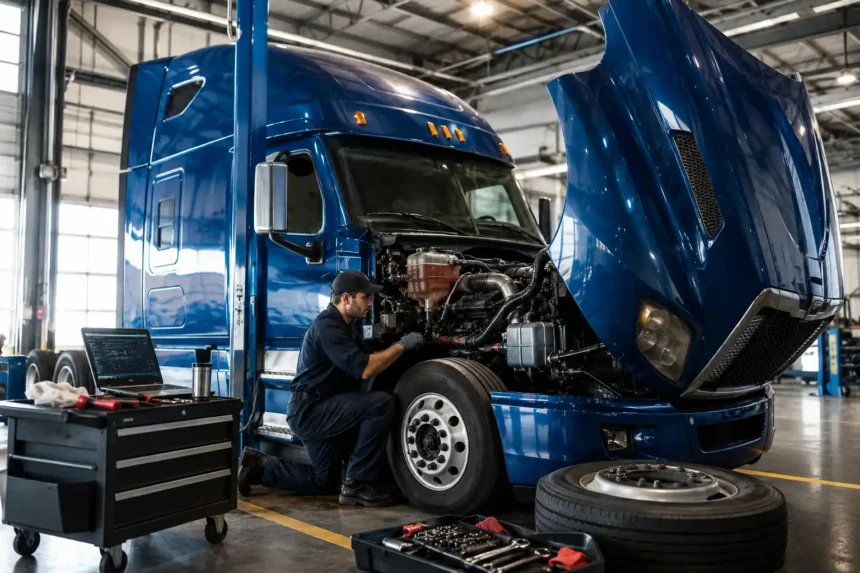
Routine maintenance plays a major role in keeping a semi-truck reliable, efficient, running, and safe on the road. Preventive maintenance helps reduce breakdown risk, limits unexpected delays, and supports longer equipment life, which matters for both owner-operators and fleet managers. The tips below outline practical maintenance habits and service intervals that can help protect your investment, improve uptime, and keep your truck ready for the work ahead.
The Importance of Staying Consistent
One of the most important maintenance habits is simply staying consistent with your service schedule. Oil changes, fluid checks, brake inspections, tire rotations, and filter replacements should be performed according to the manufacturer’s recommendations and your truck’s usage and driving conditions. Remember, heavy hauling, mountain driving, extreme weather, and long-distance routes can put extra stress on the engine and drivetrain, so if your truck is being used under demanding conditions, it may need to be inspected and serviced more often. Waiting too long between maintenance checks can allow small issues to turn into major repairs.
Pay Close Attention to Tires and Brakes
Tires and brakes experience constant wear on commercial trucks. Poorly maintained tires can reduce your fuel efficiency and create generally unsafe driving conditions. Uneven tread wear can also indicate that you have an issue with your alignment or suspension, and you should get it looked at by a mechanic as soon as possible.
Brakes should be inspected regularly, especially for semis hauling heavy loads. All that weight puts a lot of stress on the braking system, so you’ll need to replace worn pads, drums, and rotors regularly to ensure your rig can brake safely on every route. Ignoring tire or brake problems often leads to expensive repairs or, worse, dangerous accidents on the road.
Keep Detailed Maintenance Records
One of the most overlooked aspects of owning a semi involves keeping organized records of your service and maintenance history. Every oil change, repair, inspection, tire rotation, and part replacement should be documented carefully. These records help you track recurring issues, stay on schedule with maintenance, and verify warranty coverage when needed.
Service records can also be valuable when it comes time to sell your truck. Buyers feel much more confident buying a used semi that has a complete maintenance history. Having records that show your truck got the proper care in its lifetime and that will still be a reliable rig. This can help your truck sell faster and get a higher resale price compared to one with little to no maintenance history.
If you’re on the other side of the equation and you’re looking at used trucks for sale, be sure to ask for maintenance and repair records before you make a purchase.