


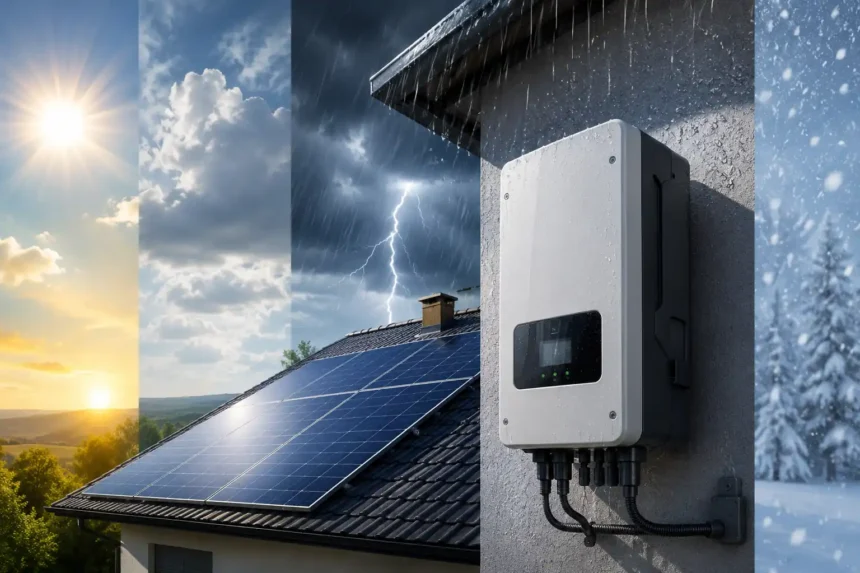
For many homeowners, installing a solar inverter outside is the most practical option because it can simplify system layout and save interior space. Outdoor placement also means the inverter will be exposed to heat, cold, rain, humidity, and other weather conditions that can affect long-term performance.
Understanding how weather impacts a solar inverter can help homeowners make better installation decisions and protect the system over time.
Temperature Extremes and Performance
Temperature plays a major role in how efficiently your solar inverter runs. While most inverters are designed to handle a wide range of conditions, extreme heat can reduce their efficiency and even shorten their lifespan. When temperatures rise, internal components like capacitors and semiconductors experience more stress, which can lead to something called “thermal derating”. This is a process where the inverter limits its output so it doesn’t overheat.
On the other end of the spectrum, or the other side of the thermometer, as it were, extremely cold weather can also affect performance. While inverters generally handle cold better than heat, freezing conditions can cause slower startup times or temporary inefficiencies until the system warms up. Proper installation in a shaded, ventilated, and weather-protected area can help to limit major swings in temperature throughout the year.
Humidity and Moisture
Humidity is another weather condition that can impact your inverter. High moisture levels increase the risk of condensation inside the inverter, particularly if you get frequent temperature swings. Over time, this can corrode electrical components, leading to defects or system failures. Most modern inverters are built with weather-resistant enclosures designed for outside use, but that doesn’t make them completely immune.
Making sure your inverter is properly sealed and mounted, with proper airflow around it, can reduce the risk of moisture buildup. Choosing an inverter with a higher IP rating provides a higher level of protection.
Rain and Snow
Rain and snow primarily impact inverters through exposure rather than directly impacting their operation. If an inverter is not properly sealed or installed in a protected location, water can sneak in and damage sensitive electronics. Snow accumulation can also block ventilation openings, leading to overheating once the inverter turns on again.
Mounting your inverter under an overhang or in a weatherproof enclosure can help shield it from rain and snow. Inspecting the inverter during changes in the seasons can ensure that seals and protective barriers are working properly.
Dust, Wind, and Debris
Wind can often carry dust, dirt, and debris, which can gather inside or around your inverter. Over time, this buildup can clog cooling fans and vents, reducing airflow and increasing internal temperatures. This can lead to premature wear and tear over time. Routine maintenance, like cleaning vents, can prevent long-term damage.
Ultimately, your solar inverter can weather the elements with very little trouble. However, you can give it a little extra protection by installing it in a shaded location with a slight overhang and inspecting and cleaning it regularly. This will help your SMA hybrid solar inverter live a long, productive life for your solar power system.