

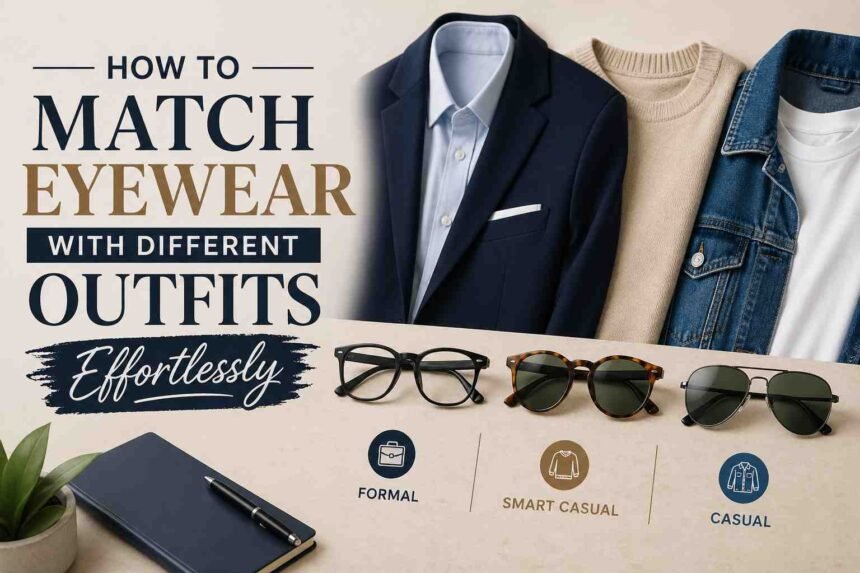
Accessories often define how complete an outfit feels, and eyewear is one of the few pieces that can instantly change the tone of your look. Whether you’re dressing for a casual day out or putting together something more polished, the right pair can tie everything together without much effort.
- Start with the Overall Outfit Mood
- Balance Colors Instead of Matching Exactly
- Consider the Occasion
- Pay Attention to Proportions
- Let One Element Stand Out
- Adapt to Seasonal Styling
- Align with Your Personal Style
- Keep Comfort in Mind
- Build a Small, Versatile Collection
- Avoid Overthinking the Process
- Final Thoughts
The challenge, however, is knowing how to match eyewear with different outfits without overthinking it. With a few practical guidelines, you can make confident choices that feel natural and well put together.
Start with the Overall Outfit Mood
Before selecting any accessory, understand the mood of your outfit. Is it relaxed, formal, sporty, or somewhere in between? Eyewear should align with that tone rather than clash with it.
For example, a laid-back outfit with denim and a simple top pairs well with casual frame styles, while a structured outfit calls for something more refined. Keeping this alignment in mind makes the selection process much easier.
Balance Colors Instead of Matching Exactly
A common mistake is trying to match eyewear perfectly with outfit colors. Instead, aim for balance. Neutral frames work well with bold outfits, while more expressive frames can complement simple clothing.
Black, brown, and metallic tones are versatile and can adapt to most looks. On the other hand, if your outfit is minimal, adding a pop of color through your eyewear can make it more interesting without being overwhelming.
Consider the Occasion
Different settings call for different styling choices. What works for a casual outing may not suit a more formal environment.
For everyday wear, you can experiment with relaxed and trendy designs. For more polished settings, it’s better to stick with cleaner shapes and subtle tones. Keeping the occasion in mind ensures that your eyewear enhances your look rather than distracting from it.
Pay Attention to Proportions
The size and shape of your eyewear should complement the structure of your outfit. Oversized frames can work well with flowy or relaxed clothing, while smaller, more defined frames pair nicely with structured pieces.
This balance helps create a cohesive look. When proportions align, the overall outfit feels intentional rather than random.
Let One Element Stand Out
If your outfit already has strong patterns or bold colors, it’s best to keep your eyewear simple. On the other hand, if your clothing is understated, your frames can take on a more prominent role.
This approach prevents visual clutter and keeps your style clean. The idea is not to compete for attention but to create harmony between different elements.
Adapt to Seasonal Styling
Seasonal changes naturally influence how outfits come together. Lighter fabrics and brighter colors in warmer months often pair well with more relaxed and open frame styles. In contrast, colder seasons may call for deeper tones and more structured designs.
Somewhere around the midpoint of your styling decisions, you’ll likely explore different options in sunglasses for women, especially when building outfits for outdoor settings. Choosing frames that align with seasonal tones can make your overall look feel more cohesive and well thought out.
Align with Your Personal Style
Trends can offer inspiration, but your personal style should guide your final choice. If you prefer minimal outfits, stick to classic frame designs. If your style is more expressive, don’t hesitate to experiment with unique shapes or colors.
Consistency in personal style makes it easier to mix and match different pieces without second-guessing your choices.
Keep Comfort in Mind
No matter how well something looks, it won’t feel right if it’s uncomfortable. Eyewear should fit properly and feel natural throughout the day.
Frames that are too tight or too loose can distract you and affect your overall confidence. A good fit ensures that your accessory enhances both your appearance and your comfort.
Build a Small, Versatile Collection
Instead of relying on a single pair for every outfit, consider building a small collection of versatile options. A couple of neutral styles and one or two statement pieces are usually enough to cover different looks.
This approach gives you flexibility without overcomplicating your choices. You’ll always have something that works, regardless of what you’re wearing.
Avoid Overthinking the Process
Matching eyewear with outfits doesn’t need to be complicated. Once you understand the basics—balance, proportion, and occasion—you can rely on your instincts.
Sometimes, the simplest choice is the right one. If something feels natural and looks balanced, it usually works.
Final Thoughts
Effortless styling comes from understanding how different elements work together. Eyewear, when chosen thoughtfully, can enhance your outfit without demanding too much attention.
By focusing on balance, comfort, and personal style, you can make choices that feel easy and consistent. Over time, this process becomes second nature, allowing you to create polished looks without overthinking every detail.