


Rodents are a persistent and common issue for property owners across the country. When mice and rats enter a residential building, they introduce direct health risks and cause extensive structural damage. Managing this problem requires a systematic, evidence-based approach rather than temporary fixes.
Ignoring a minor rodent presence often leads to a major infestation within weeks due to their rapid reproductive cycles. This guide outlines how to accurately identify an infestation, the specific health and property risks involved, and practical, proven steps for long-term rodent control.
Why Rodents Seek Shelter in Your House
Rodents are driven by basic biological needs: they constantly search for food, water, and secure shelter. Human dwellings provide an ideal environment that meets all these needs simultaneously. This is especially true during extreme weather conditions, such as intense summer heat or freezing winter temperatures.
Mice and rats are biologically equipped to infiltrate human spaces. Their skeletal structure allows them to squeeze through surprisingly small openings. A standard house mouse can compress its body to fit through a hole the size of a dime (roughly a quarter of an inch). A full-grown rat requires an opening no larger than a quarter (about half an inch) to gain entry. Several environmental and structural factors attract them:
- Temperature Regulation: Extreme external temperatures drive rodents indoors. A house provides a climate-controlled, stable environment in which they can survive harsh seasons.
- Accessible Food Sources: Unsecured garbage, spilled pet food, birdseed stored in garages, and pantry items provide an effortless and reliable food supply.
- Nesting Materials: Unfinished spaces such as attics, basements, and wall voids provide dark, quiet areas. These spaces are often filled with paper, cardboard, and insulation, which rodents repurpose to construct their nests.
- Water Access: Leaky pipes, pet water bowls, and condensation buildup provide the hydration that rats, in particular, need to survive each day.
Common Signs of a Rodent Infestation
Identifying a rodent problem early is critical to preventing severe damage and widespread contamination. Visual and auditory indicators include:
- Droppings: This is often the first visible sign. Mouse droppings are small, dark, and pellet-shaped, resembling grains of rice. Rat droppings are larger and capsule-shaped. They are typically found inside cabinets, along baseboards, or scattered in the attic.
- Gnaw Marks: Rodents have continuously growing incisors. They must chew on hard surfaces to keep their teeth filed down. Look for fresh gnaw marks on wood framing, plastic storage bins, or utility pipes.
- Strange Noises: Scratching, squeaking, or scurrying sounds inside walls, ceilings, or under floors, usually occurring at night when rodents are most active.
- Grease Smudges: As rodents repeatedly travel along the same paths on walls, the oils and dirt from their fur leave dark smudges on paint and woodwork.
- Nesting Sites: Piles of shredded paper, fabric, or torn insulation gathered in hidden corners behind large appliances or in the attic.
The Health and Structural Risks of Rodents
Rodents cause significant, measurable problems beyond simply being a household nuisance. They pose direct, scientifically documented threats to human health and compromise a building’s structural integrity.
Health Hazards and Contamination
Rodents are vectors for numerous pathogens that can be transmitted to humans. Hantavirus, Salmonella, and Leptospirosis are well-documented illnesses linked directly to house mice and rats. They spread these diseases through their droppings, urine, and saliva. As rodents travel through a house foraging for food, they cross kitchen counters and pantry shelves, contaminating food products and food preparation surfaces.
Furthermore, the accumulation of rodent waste creates secondary health issues. As droppings and urine dry, microscopic particles can become airborne. When occupants inhale these particles, it negatively impacts indoor air quality and frequently triggers respiratory issues, asthma attacks, or severe allergic reactions.
Property Damage and Chewed Wiring
The physical damage caused by an unchecked rodent infestation can be structurally and financially devastating. Their constant gnawing damages drywall, weakens wood support beams, and can puncture PVC plumbing pipes, leading to hidden water leaks.
One of the most severe and immediate risks involves the home’s electrical system. When rodents chew through the protective plastic coating on electrical wires in walls or attics, it exposes the live copper wire. This creates a high risk of electrical shorts and subsequent house fires. According to fire investigation statistics, unknown electrical shorts caused by rodent damage account for a notable percentage of residential structural fires.
Effective Strategies for Rodent Control
Managing a rodent issue requires a multi-tiered approach. Relying on a single method, such as trapping alone, is rarely sufficient. The most effective protocol combines exclusion techniques, strict sanitation practices, and active population reduction.
Inspection and Sealing Entry Points
Exclusion is the most critical step in long-term rodent control. If you remove the current population but leave entry points open, new rodents from the surrounding environment will quickly take their place.
- Conduct a Thorough Inspection: Systematically examine the foundation, roofline, eaves, soffits, crawlspace vents, and areas where utility pipes penetrate the exterior walls.
- Seal the Gaps: Use heavy-duty materials that rodents cannot chew through. Stuff small holes tightly with steel wool or copper mesh, then seal over them with heavy-duty silicone caulk or expanding foam formulated specifically for pest blocking.
- Repair Vents and Screens: Ensure that all chimney caps, attic vents, crawl space grates, and window screens are intact, free of rust holes, and securely fastened. Install door sweeps on exterior doors to eliminate gaps at the threshold.
Sanitation and Habitat Modification
Removing what attracts rodents alters the environment, making your home significantly less appealing to them.
- Store all dry goods, including pet food and birdseed, in airtight metal or heavy-duty plastic containers with secure lids.
- Do not leave pet food or water out overnight.
- Keep indoor and outdoor trash cans tightly sealed and empty them on a regular schedule.
- Clear brush, overgrown vegetation, firewood stacks, and debris away from the immediate perimeter of your house foundation. Maintain a gap of at least two feet between vegetation and the exterior walls.
Trapping and Removal Methods
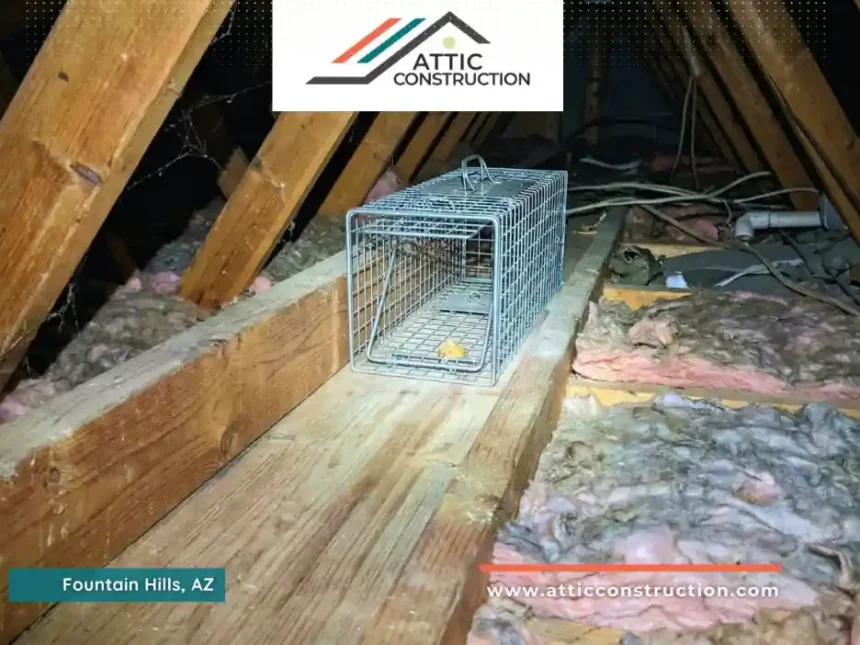
Once the exterior is properly sealed, you must remove any trapped rodents. Traditional snap traps remain one of the most effective, reliable, and humane methods for targeted removal because they kill instantly. Place traps flush against walls and in dark corners where rodents naturally travel. Check and clear traps daily to maintain hygiene.
While chemical poison baits are available, they present substantial risks for indoor use. If a poisoned rodent retreats inside a wall void or under a floorboard to die, it will create a severe, lingering odor problem that is difficult to resolve. Furthermore, toxic baits pose a significant secondary poisoning danger to household pets and a direct hazard to small children.
How Insulation Impacts Rodent Prevention
Many homeowners overlook the direct connection between their attic environment and effective pest management. The materials located inside your walls and ceilings play a major role in whether rodents decide to establish a permanent presence.
The Connection Between Attic Health and Rodents
Attics provide a warm, undisturbed environment that rodents actively seek out. Traditional loose-fill or rolled fiberglass insulation serves as an ideal nesting material for mice and rats. They easily tear the fibers apart to build nests, leaving behind large quantities of urine and feces. This waste physically ruins the insulation material, compacts it, and severely degrades your home’s thermal energy efficiency.
When old, heavily contaminated materials become compromised, they must be removed and replaced to restore the home’s air quality and energy retention. Installing proper house insulation in Fountain Hills helps maintain an energy-efficient home and entirely removes the biohazardous environment left behind by a previous infestation. Upgraded, high-density materials, or properly sealed and sanitized attics, physically deter rodents from treating the upper levels of your home as a viable nesting ground.
Professional Intervention vs. DIY Approaches
While homeowners can successfully handle minor, isolated incidents, severe or recurring infestations require professional knowledge and equipment. Knowing when to escalate the situation to an expert saves valuable time and prevents ongoing structural damage.
When to Call the Experts
If you hear constant scratching in the walls during the day, find extensive droppings in multiple rooms, or notice signs of chewed electrical wiring, a DIY approach is likely insufficient. Pest management professionals possess the diagnostic tools to locate hidden nests and identify obscure entry points on roofs or in crawlspaces that the average person might overlook.
Professionals are also trained to handle the safe, compliant cleanup of hazardous biological waste, protecting the homeowner from airborne diseases. Relying on a reliable rodent control service in Fountain Hills ensures the current infestation is completely eradicated using industry-standard protocols. Furthermore, it guarantees that permanent preventive measures are correctly installed to block any future access to your property.
Conclusion
Addressing a rodent problem requires prompt action, meticulous exclusion, and consistent sanitation practices. By thoroughly understanding how rodents enter a residential building and precisely what biological drivers attract them, property owners can take deliberate, effective steps to protect their space. Regular structural inspections and proper maintenance of exterior vulnerabilities, particularly focusing on the attic space and foundation, form the baseline of a pest-free environment.
Attic Construction is an insulation contractor in Fountain Hills, AZ, specializing in attic insulation and rodent control for homeowners. Implementing these objective strategies will protect your property’s structural integrity, prevent costly repairs, and maintain a safe, highly sanitary living space for all occupants.