


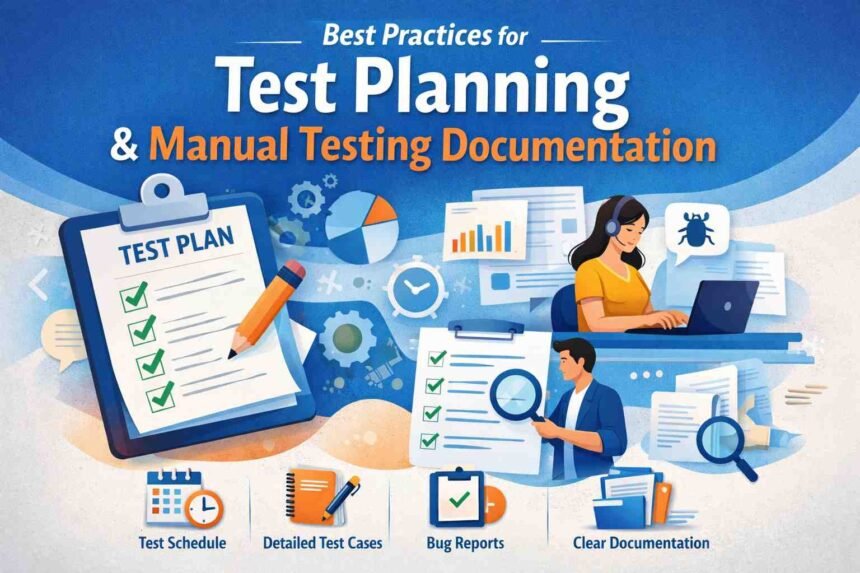
Every software team claims that it places a high value on testing, but very few teams follow any practices that actually yield more reliable releases. Most of the common problems teams face are not caused by bad testers. They are caused by poor processes and inconsistent documentation practices. The following table outlines a step-by-step approach that any team, regardless of its size, can use to enhance the quality and reliability of its testing process at once.
Practice 1: Build a working test plan, not a compliance document
The single biggest error that most teams make is to create test plans that exist just to check a box on an audit checklist. These types of generic, overlong documents get stuck in a shared drive and are never read by anyone on the team.
Good test planning produces a short, specific working document that every team member actually understands and references. At the very least, it should make clear the scope of testing, roles in the team and responsibilities within the team, the types of testing to be conducted, and objective exit criteria. The most valuable and most frequently omitted section covers suspension criteria.
The upfront definition of such conditions saves days of unproductive discussion as to whether a blocking bug is serious enough to halt the entire testing. A good test plan is also explicitly considered to be a living document, one that is changed regularly to reflect new requirements or newly identified risks.
Practice 2: Standardize your test case template
Inconsistent structure is the biggest problem of unreliable test execution. When all the testers write their test cases in their own way, two different testers will run the same test and come to entirely different conclusions. Standardization on one common template eliminates virtually all of this ambiguity.
Every single test case should have the same consistent structure with the identifier, objective, preconditions, and test data under control, step-by-step actions numbered, and observable expected results. Preconditions are the single most underrated component of a reliable test case. More failed test runs end in confusion over an inconsistent starting state than for any other reason. The template should also explicitly forbid vague language, such as verify the page works correctly, that leaves far too much room for subjective interpretation.
Practice 3: Design test suites for complete coverage
It is now time to build out the entire test portfolio on your base template. Teams almost always overtest the obvious happy path and completely overlook edge cases, error conditions, and invalid inputs. The vast majority of expensive production bugs are found in scenarios that no one remembered to include in their test suite.
A well-designed test suite breaks functionality down into logical groups and explicitly includes tests for all three categories of behaviour. For every happy path test, there should be at least two corresponding tests for invalid inputs and error handling. Teams should also explicitly test for common failure modes such as slow network connections, partial data submission and interrupted user sessions.
Practice 4: Implement clear execution and reporting standards
Even the best-written test cases will produce poor results if execution is inconsistent. Teams should define clear standards for how test results are recorded and what level of detail is required for failed tests. At minimum, every failed test should include clear steps to reproduce, supporting screenshots and server logs, and an objective description of the actual behaviour observed.
Well-run teams also make a point of documenting past tests as well. This creates an auditable trail of exactly what was tested, and eliminates the very common post-release argument about whether a specific scenario was actually validated or not.
Practice 5: Maintain and update your documentation
Even a perfect test suite decays over time if it is not actively maintained. As software changes, old test cases become obsolete, and new functionality requires new tests to be added. Teams should schedule a short review of the full test suite at the start of every sprint to remove outdated tests, update changed behaviour, and add coverage for new features.
High-quality test cases for manual testing will remain usable and reliable for years if they are properly maintained. Modern test management tools have also eliminated almost all of the friction in this process, providing centralized version control, reuse of common test steps, and automatic traceability linking test cases back to original requirements and open defects.
Final Note
Contrary to popular myth, good documentation actually speeds up development cycles. It reduces redundant work, eliminates miscommunication between teams, and allows new members to get up to speed in hours rather than weeks. No process will ever catch every possible defect, but consistent application of these five steps reliably reduces the number of surprise production issues by a very wide margin.